
Knowledge
Suez Canal vs Cape of Good Hope: The $400,000 Daily Gamble in 2026
The $400,000 Daily Gamble: Why Rerouting Around Africa is No Longer Sustainable in 2026
Introduction
The year 2026 brought an unprecedented geopolitical crisis to the Middle East. The Iran conflict effectively closed the Strait of Hormuz. This critical development shocked global supply chains. It created a dire need for stable, secure logistical solutions. Many shipping companies initially chose the perceived safety of rerouting around the Cape of Good Hope (COGH). However, this illusion of safety carries unsustainable financial and operational costs. The Suez Canal, supported by strategic logistical partners, emerges as the only viable long-term option. Emdad, with its unparalleled expertise, stands ready to navigate these complexities. We ensure seamless operations for your vessels.
The Unseen Costs: Beyond the Longer Route
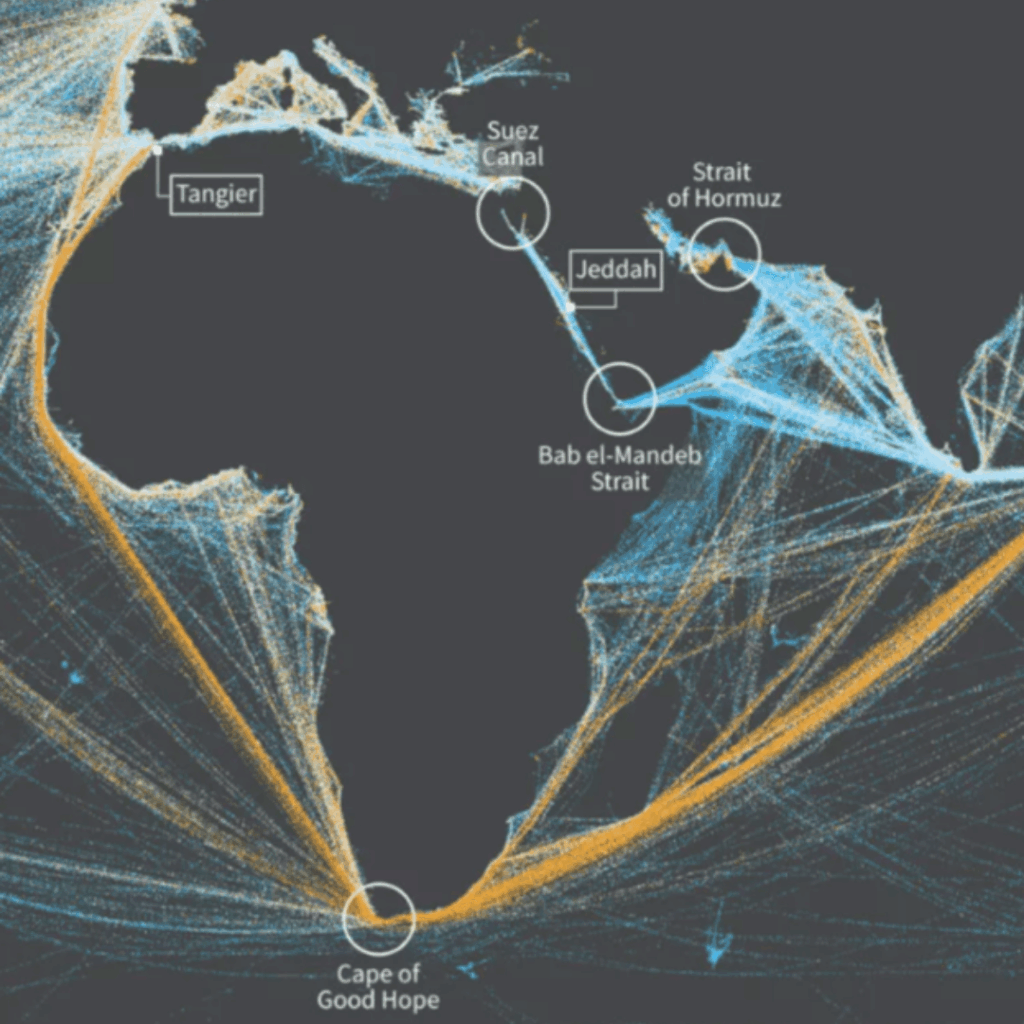
Choosing the Cape of Good Hope route might seem like a straightforward solution. It appears to avoid regional tensions. Yet, this decision triggers a cascade of hidden costs and operational inefficiencies. The COGH route adds approximately 3,500 nautical miles compared to the Suez Canal. This represents a staggering 40% increase in distance . This extended journey directly translates into significantly higher fuel consumption. For example, a single voyage around the Cape can incur an additional $800,000 to $1,000,000 in fuel costs alone [1].
Furthermore, many shipping companies instruct their vessels to reduce speed. They do this to mitigate escalating fuel expenses. Ships typically slow down from 18-20 knots on the traditional Suez route to 15-17 knots around the Cape. Paradoxically, this fuel-saving measure further extends transit times by an additional 2-3 days. Consequently, vessels face a total delay of 10-15 days compared to the Suez Canal route. This prolonged transit directly impacts delivery schedules and supply chain predictability.
Moreover, the waters around the Cape of Good Hope are notoriously treacherous. They experience approximately 12 major storm events annually. Peak severity occurs between April and June [2]. Such adverse weather conditions force ships to slow down. They may even berth at nearby ports. This adds another 1-3 days of delay. Upon arrival in Europe, vessels often encounter congested ports like Hamburg and Bremen. Waiting times there have surged by 49-77% due to irregular arrivals. These cumulative delays contribute to a daily operational cost for Very Large Crude Carriers (VLCCs) and large container ships. This cost ranges from $130,000 to $400,000 [3]. Clearly, the COGH gamble carries immense financial burden.
The Soaring Price of Risk: War Insurance & Market Volatility
While the Red Sea route involves considerations regarding war risk insurance premiums, the COGH alternative introduces its own set of financial risks. War risk insurance premiums in the Red Sea and Gulf regions typically range from 0.5% to 1% of cargo value [4]. However, the ‘hidden’ risks associated with the COGH route often outweigh these direct insurance costs. These risks include prolonged delays, increased wear and tear on vessels, and the opportunity cost of lost time. The global shipping market remains highly volatile. It features fluctuating freight rates and persistent supply chain uncertainty. This makes long-term contract planning and accurate budgeting incredibly challenging for ship owners and managers.
The Suez Canal: A Strategic Imperative, Not Just a Shortcut
In this turbulent environment, the Suez Canal has unequivocally reasserted its indispensable role. It offers unparalleled efficiency and predictability. It provides significant time and cost savings despite its tolls. Transit through the Suez Canal results in reduced fuel consumption and notably faster delivery times. While Suez Canal tolls range from $30,000 to $450,000 for a one-time passage, these costs are often dwarfed by the cumulative expenses of the COGH detour.
Egypt’s strategic position as a maritime hub further enhances the Suez Canal’s appeal. The region benefits from established security measures within the Canal and its surrounding ports. Furthermore, the growing importance of Egyptian Red Sea and Mediterranean ports provides robust logistical support for vessels choosing this vital waterway.
Emdad: Your Partner in Navigating the New Normal
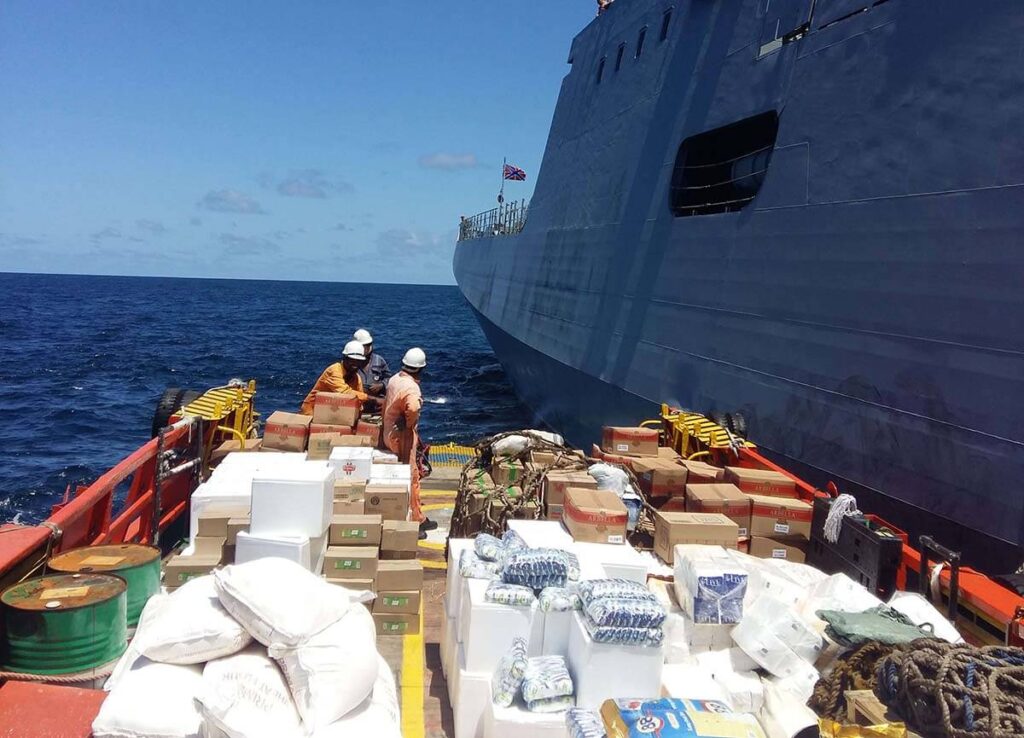
Navigating the complexities of global shipping in 2026 demands a reliable, experienced partner. Emdad offers strategic solutions tailored for Suez Canal transit. Our rapid response capabilities and 24/7 operational readiness across Egyptian ports ensure your vessels receive comprehensive ship chandlery and logistics support. This includes timely provisions, essential spare parts, and critical technical assistance. We understand the urgency of minimizing downtime and optimizing operational efficiency.
Emdad combines deep local expertise with adherence to global standards. We efficiently navigate complex port regulations. We streamline customs clearance processes. This ensures a smooth, swift turnaround for your ships. By partnering with Emdad, ship owners and managers make informed decisions. They significantly reduce their financial exposure and operational risks. We transform the uncertainty of the current maritime landscape into predictable, cost-effective operations.
Frequently Asked Questions (FAQ)
- Q: What are the primary financial risks of rerouting around the Cape of Good Hope in 2026?
A: Rerouting entails increased fuel costs (up to $1,000,000 extra per voyage), extended transit times (10-15 days), and higher daily operational costs (ranging from $130,000 to $400,000). Additionally, vessels face potential delays due to harsh weather conditions and port congestion.
- Q: How does Emdad help mitigate these risks for vessels transiting the Suez Canal?
A: Emdad provides rapid, 24/7 comprehensive ship chandlery and logistics support in Egyptian ports. We ensure efficient customs clearance, timely provisions, and technical assistance. This minimizes downtime and optimizes routes for vessels utilizing the Suez Canal.
- Q: Is the Suez Canal a safer option than the Cape of Good Hope given current geopolitical tensions?
A: While the Red Sea has geopolitical considerations, the Suez Canal offers a more predictable and efficient route with established security protocols. The COGH route, while avoiding direct conflict zones, introduces significant operational and financial risks due to longer distances, harsh weather, and increased transit times. Therefore, the Suez Canal, with reliable local support, presents a strategically superior option.
Conclusion
The $400,000 daily gamble of rerouting around the Cape of Good Hope is simply unsustainable for global shipping in 2026. The Suez Canal remains the strategic imperative. It offers efficiency, predictability, and significant cost savings.
Partnering with a reliable expert like Emdad transforms this imperative into a seamless reality.
We provide the essential support needed for secure, efficient, and cost-effective maritime operations. Choose Emdad to navigate the new normal with confidence.
Author
Ibrahem elguoshy
Director
Categories
Popular Posts
Related posts
November 1, 2025
Your Guide to Choosing the Best Ship Chandler in Egypt
November 11, 2025
Ship Chandler Services: The Ultimate Guide to Marine Supply
November 21, 2025
HACCP Ship Provisions: Why Compliance is Crucial for Food Safety at Sea
December 1, 2025
MARPOL Ship Chandler Role: Navigating Vessel Waste Management

December 11, 2025
Ship Chandler Crew Welfare: Beyond Provisions in Egyptian Ports
December 21, 2025
Cold Chain Red Sea: Ship Provisioning for Freshness and Safety
January 1, 2026
Essential Technical Stores Every Vessel Needs in Egyptian Ports
January 11, 2026
Ship Chandler Crew Welfare: Essential Services in Egyptian Ports
January 21, 2026
Ship Provisioning Red Sea: Local vs. Imported Supplies Guide
February 1, 2026


