

Knowledge
HACCP Ship Provisions: Why Compliance is Crucial for Food Safety at Sea
In the demanding environment of maritime operations, the health and well-being of the crew are paramount. A single case of foodborne illness can compromise the safety of the entire vessel and lead to significant operational delays. This is why food safety standards, particularly HACCP (Hazard Analysis and Critical Control Points), are not just regulatory requirements but essential operational practices for any reliable ship chandler.
This article explores why HACCP compliance is crucial for ship provisions and how it guarantees the quality and safety of the food supplied to your vessel.
The Role of HACCP in Ship Provisions and Chandlery
HACCP is an internationally recognized system for reducing the risk of safety hazards in food. It focuses on preventing hazards rather than relying on end-product inspection.
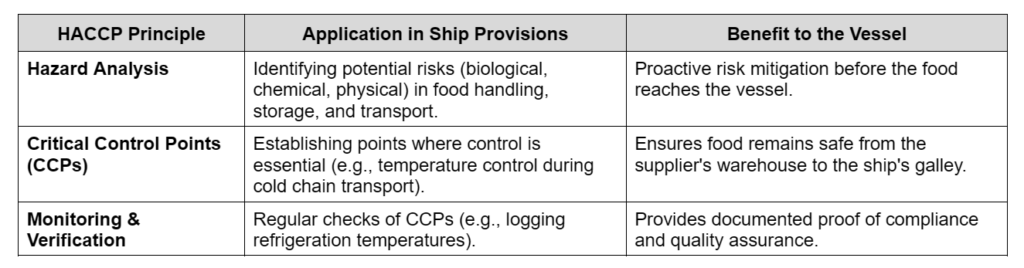
The primary goal of HACCP in the maritime context is to ensure that the food supplied does not pose a health risk to the crew, thereby preventing illness that could compromise the vessel’s operational capability.
The Cold Chain: The Most Critical Control Point
For fresh and frozen provisions, maintaining the cold chain is the single most important factor. Any break in this chain can lead to rapid bacterial growth, rendering the food unsafe.
- Supplier Warehouse: Provisions must be stored in temperature-controlled environments, segregated by type (e.g., meat separate from vegetables).
- Transportation: Refrigerated trucks (reefers) must be used for transport to the port, with continuous temperature monitoring.
- Transfer to Vessel: The transfer process must be executed swiftly and efficiently to minimize exposure to ambient temperatures, especially in hot climates like the Red Sea.
Beyond Food: Quality in Other Provisions
While HACCP focuses on food, the commitment to quality extends to all provisions:
- Water Quality: Potable water supply must be sourced from approved facilities and delivered using certified, clean hoses and equipment.
- Cleaning Supplies: Detergents and disinfectants must be industrial-grade and compliant with international health standards to maintain hygiene on board.
How Emdad Ensures HACCP Compliance
A reliable ship chandler like Emdad integrates these standards into every step of the supply chain:
- Sourcing: We only source provisions from certified local and international suppliers.
- Storage: Our warehouses are equipped with state-of-the-art refrigeration and freezing units, with 24/7 temperature logging.
- Logistics: We use dedicated refrigerated transport vehicles for delivery to the port.
- Documentation: We provide clear documentation, including temperature logs and certificates of origin, for full transparency.
Conclusion
Investing in a ship chandler that prioritizes HACCP compliance is an investment in your crew’s health and your vessel’s operational continuity. By demanding these standards, you protect your crew from foodborne risks and safeguard your schedule from costly, unforeseen delays.
Emdad is committed to the highest standards of food safety, ensuring that every provision supplied meets the rigorous demands of international maritime operations. Contact us today to discuss your provision needs and our commitment to quality.
Author
Ibrahem elguoshy
Director
Categories
Popular Posts
Related posts

November 1, 2025
Your Guide to Choosing the Best Ship Chandler in Egypt

November 11, 2025
Ship Chandler Services: The Ultimate Guide to Marine Supply
November 21, 2025
HACCP Ship Provisions: Why Compliance is Crucial for Food Safety at Sea
December 1, 2025
MARPOL Ship Chandler Role: Navigating Vessel Waste Management

December 11, 2025
Ship Chandler Crew Welfare: Beyond Provisions in Egyptian Ports

December 21, 2025
Cold Chain Red Sea: Ship Provisioning for Freshness and Safety

January 1, 2026
Essential Technical Stores Every Vessel Needs in Egyptian Ports

January 11, 2026
Ship Chandler Crew Welfare: Essential Services in Egyptian Ports

January 21, 2026
Ship Provisioning Red Sea: Local vs. Imported Supplies Guide

February 1, 2026


