
Knowledge
Ship Chandler in Egypt: 7 Questions Before You Choose
How to Choose a Ship Chandler in Egypt: 7 Questions That Protect Your Port Call
A ship chandler is not simply a vendor that sends a price list. The right supplier helps turn a vessel’s requirements into a clear, workable delivery request. Therefore, choosing a Ship Chandler in Egypt should involve more than comparing the lowest number on a quotation.
A port call can change quickly. The ETA may move, crew requirements may change, or a missing store may become more important than expected. In those moments, the best supplier is the one whose scope, communication, and process are clear before the order is urgent.
Use the seven questions below to assess a potential supplier. They are practical, easy to ask, and useful for any vessel preparing a call in Egypt.
1. What does the supplier actually provide?
Start with the service scope. Some suppliers focus on fresh provisions. Others may concentrate on technical stores, cabin supplies, or a broader range of daily vessel needs. A clear answer prevents the crew from sending a list that the supplier cannot realistically fulfil.
Ask for the categories in writing. Then compare them with your Provision List. Additionally, check whether the supplier distinguishes between provisions, cabin needs, and technical items. The aim is not to find a supplier that claims to provide everything. Instead, find one that clearly explains what it can review and supply.
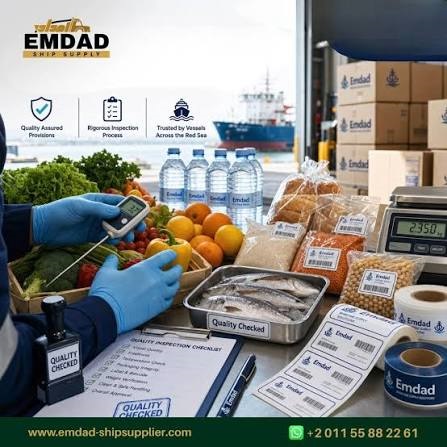
Emdad’s published range includes fresh produce, dry and canned goods, frozen food, beverages, linens, cleaning supplies, basic electrical items, and ship sundries. [1]
2. Which ports and delivery areas does it serve?
A supplier’s location matters. However, the more useful question is whether it publishes a clear process for the port call you are planning. Ask which port is covered, whether an agent is involved, and who coordinates delivery information.
For a Safaga call, Emdad states that it is based in Hurghada and supplies vessels operating through Safaga Port. It also states that deliveries are coordinated with port authorities and agents inside Safaga Port. [1] Therefore, the vessel should still provide the right local contact and latest call details. This is useful information because it defines the service area without promising a result that depends on the specific call.
3. What must be included in a supply request?
A professional answer should be specific. At minimum, expect to provide the vessel name, IMO number, latest ETA, delivery contact, crew count, and an itemised Provision List. If the request includes special packaging, storage limits, or required specifications, those details should be visible from the start.
A supplier that asks for this information is not making the process difficult. On the contrary, it is gathering the details needed to assess the request properly. Moreover, a complete first request gives the vessel a stronger basis for comparing later quotations.
4. How are substitutions handled?
Substitutions are common in ship supply. Yet they should never be treated as an afterthought. Ask whether the supplier can flag an unavailable item, propose an alternative, and wait for approval where necessary.
Then make your own preferences clear. Mark items as “no substitute” when the brand, size, or technical specification is essential. Conversely, state what kind of substitute is acceptable for flexible items. This makes the quotation more useful and reduces surprise at delivery.
5. How are revisions controlled?
ETAs and requirements can change. Consequently, you need a simple way to show which version of the Provision List is current. Ask the supplier how it handles amended lists and how it confirms that a previous version has been replaced.
The best practice is straightforward. First, send one updated file with a date and version number. Additionally, include a short note explaining what changed. This gives the vessel, agent, and supplier one shared point of reference.
6. What information will appear on the quote and documents?
A quote should let the buyer compare like with like. Request product descriptions, quantities, units, alternatives where relevant, and any terms that affect the final order. If documents or invoice details must follow a vessel or company format, share that requirement early.
Clear paperwork does more than support finance. Furthermore, it helps the vessel check that the list, quote, and final delivery are talking about the same items.
7. Who remains the point of contact until handover?
Communication can fail when several people send instructions independently. Therefore, nominate one vessel or agency contact for changes. Ask the supplier to identify the person or channel that will receive the confirmed list and delivery updates.
This question matters most when the call is moving quickly. Although a reliable contact path cannot guarantee availability, it can reduce uncertainty and help every party work from the latest instruction.
Compare quotes on the same basis
Price should be part of the decision. However, it should not be the only factor. To compare suppliers fairly, send the same dated Provision List and request the same level of detail from each one.
| Compare this | Why it matters |
| Product specification and unit | Prevents a cheap quote from covering a different item or pack size. |
| Quantity and approved substitute | Makes changes visible before confirmation. |
| Port and delivery contact | Ensures the quote fits the actual call. |
| Documentation requirements | Helps avoid corrections later. |
| Revision process | Shows how the supplier handles a changing ETA or list. |
A practical Safaga starting point
If your vessel is calling at Safaga, begin with a clear Provision List and current ETA. Then request a quote that matches the published categories and coordination process. Emdad offers a direct route for this: submit the request through the Request Supply page or speak with the team through the Contact page.
Before you choose a ship chandler, ask for clarity—not promises. A supplier that understands the list, the port call, and the communication chain gives your vessel a stronger basis for decision-making.
Frequently Asked Questions
What is the first question to ask a Ship Chandler in Egypt?
Ask what product categories and port areas the supplier actually serves. This quickly shows whether the request matches its published scope.
Should I choose the lowest quote?
Compare more than price. Check the product specification, quantities, substitutions, delivery coordination information, and documents before choosing.
What should I send when requesting a quote?
Send the vessel name, IMO number, latest ETA, Safaga contact or agent, crew count, and a dated Provision List with quantities and specifications.
Does Emdad supply bunker fuel?
No. Emdad’s published scope covers vessel provisions, stores, and Safaga delivery coordination. Fuel should be arranged separately with the appropriate provider.
Conclusion
The right Ship Chandler in Egypt makes a port call easier to plan because the service scope, request details, and communication process are clear. Ask the seven questions before you commit. Then send one organised list and compare the answers on the same basis.
For Safaga calls, Emdad is ready to review requests for its published range of vessel provisions and stores. Finally, start with the latest ETA and a clear Provision List.
Author
Ibrahem elguoshy
Director
Categories
Popular Posts
Related posts
November 1, 2025
Your Guide to Choosing the Best Ship Chandler in Egypt

November 11, 2025
Ship Chandler Services: The Ultimate Guide to Marine Supply

November 21, 2025
HACCP Ship Provisions: Why Compliance is Crucial for Food Safety at Sea
December 1, 2025
MARPOL Ship Chandler Role: Navigating Vessel Waste Management

December 11, 2025
Ship Chandler Crew Welfare: Beyond Provisions in Egyptian Ports

December 21, 2025
Cold Chain Red Sea: Ship Provisioning for Freshness and Safety

January 1, 2026
Essential Technical Stores Every Vessel Needs in Egyptian Ports

January 11, 2026
Ship Chandler Crew Welfare: Essential Services in Egyptian Ports

January 21, 2026
Ship Provisioning Red Sea: Local vs. Imported Supplies Guide

February 1, 2026


